Am I the Bully? 8 Signs of Bullying Behaviour You Might Not Recognise
Today’s note is a gentle mirror—because most "bullying" isn’t obvious, and it’s rarely intentional. It often shows up when we’re stressed, rushed, feeling threatened, or trying to stay in control.
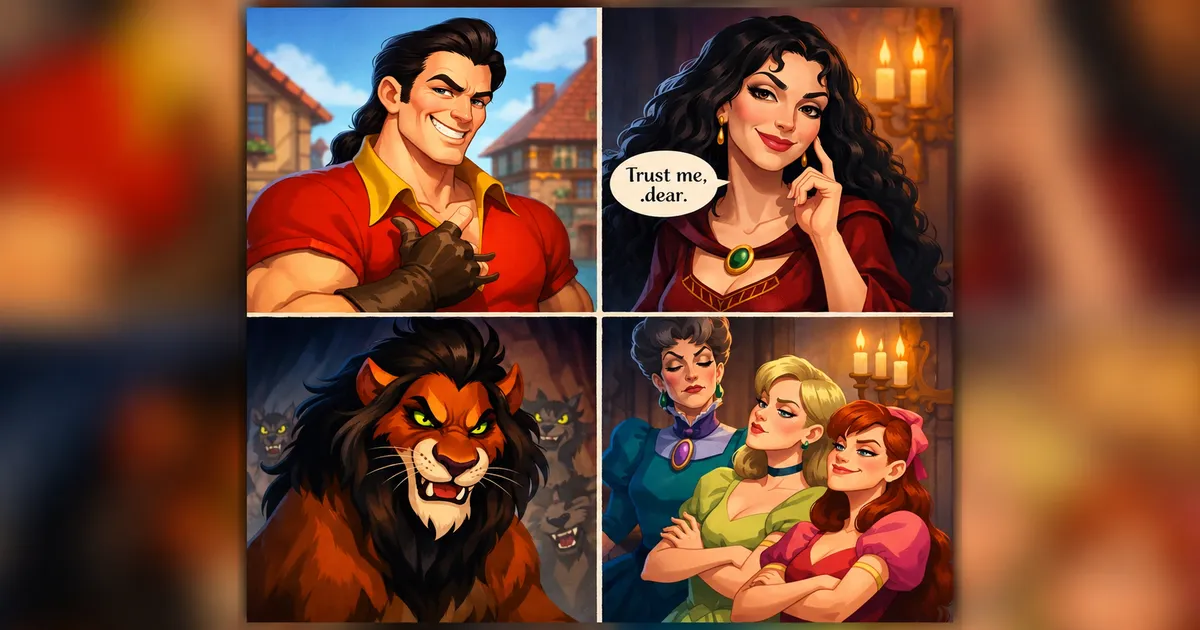
Ever notice how Disney is basically a masterclass in “how not to treat people”… wrapped in great music and cute sidekicks?
If we’re honest, a few characters could’ve really benefited from an Optimum Thinking workshop:
Gaston (Beauty and the Beast) — the guy who mistakes confidence for steamrolling everyone and calls it “charm.”
Mother Gothel (Tangled) — proof that bullying doesn’t always shout… sometimes it comes dressed as “concern,” guilt, and subtle put-downs.
Scar (The Lion King) — the king of the cutting comment, manipulation, and keeping others scared so he stays in control.
Cinderella’s stepfamily (Cinderella) — specialists in eyerolls, exclusion, and that slow drip of criticism that wears someone down.
Of course, Disney makes bullying obvious (so we know who to boo). Real life is usually much more subtle — and sometimes we don’t realise we’re doing it.
It is important to separate who you are from what you do. You’re not “a bully” as an identity — but you can demonstrate bullying behaviours under stress, fear, or the need to control or prove you are better than other people. This article is a gentle mirror to help you spot those behaviours early… and choose something more respectful, fair, and relationship-safe.
How to Recognise If I’m a Bully (Without Turning It into a Shame Spiral)
Most people who bully don’t wake up thinking, “I’m going to hurt someone today.”
Bullying is usually a pattern of behaviours that creeps in when we’re stressed, rushed, feeling threatened, or trying to stay in control.
I treat this topic with two truths held at once:
You are more than your behaviours.
Your behaviours still have consequences.
So, this isn’t a blame article. It’s a mirror—so you can spot the signs early, use self-leadership and self-governance, and shift quickly.
What Bullying Actually Looks Like (In Real Life)
Bullying is not just physical intimidation. It often shows up as repeated misuse of power—social, emotional, positional, or psychological—where another person consistently feels put down, unsafe, or controlled.
A simple test is this:
Do my words or actions regularly cause someone else to feel fear, humiliation, pressure, or exclusion?
If yes, it’s worth looking closer—without self-attack.
Bullying is often a sign of unconscious lack of self-governance: when our emotions hijack our behaviour and we try to regulate ourselves by trying to regulate or change others.
It can be driven by:
fear of losing control
fear of being disrespected
fear of looking wrong or weak
unmet expectations
resentment (often from perceived unfair exchange)
Underneath, bullying often says: “I feel unsafe, so I’ll make you smaller so I feel bigger.”
That’s not evil—it’s unowned pain expressed as behaviour. This can be driven at an unconscious level by old emotional "stuff" from situations in your past where you felt overpowered by someone.
Behaviour Clues: “Am I Crossing the Line?”
Here are common bullying behaviours—kept light, but clear. If you recognise yourself in any of these sometimes, take it as information, not condemnation.
1) I use tone, sarcasm, or “jokes” that sting
“Relax, it was only a joke.”
teasing that lands like a punch
humour that targets someone’s competence, body, background, or sensitivity
Clue: If the receiver consistently feels diminished, it’s not humour—it’s trying to overpower.
2) I pressure people with fear or consequences
“If you don’t do this, you’ll regret it.”
threats disguised as “just being honest”
making people feel replaceable, unwanted, or unsafe
Clue: If compliance is achieved through anxiety, it’s not leadership—it’s coercion.
3) I dominate conversations and don’t allow equal voice
talking over people
dismissing, eyerolling, sighing
interrupting or finishing sentences
“I’m not here to hear excuses.”
Clue: If someone becomes quieter around you over time, check if you are giving them equal time and attention in conversations.
4) I use shame as a motivator
calling someone “lazy”, “stupid”, “weak”, “too sensitive”
mocking mistakes
public corrections designed to embarrass
Clue: Shame doesn’t build performance—it builds hiding and resentment.
5) I control through exclusion or withholding
giving someone the cold shoulder
leaving them out of decisions, messages, invites
withholding warmth, approval, or information as punishment
Clue: Withholding as punishment is a form of trying to get social power over other people.
6) I “keep score” and use it to justify harshness
“After everything I do for you…”
“You owe me.”
“You’re lucky I put up with you.”
Clue: This usually signals a perceived breakdown in fair exchange—but bullying isn’t the fix that will repair the relationship.
7) I label the person instead of naming the behaviour
“You’re hopeless.”
“You’re always dramatic.”
“You’re just selfish.”
Clue: Labels trap people and you at the same time because once you label someone you scan to find proof you are right. This means the relationship will break down and you will miss opportunities. Behaviour feedback that is understood and processed, liberates people.
8) I escalate fast and justify it as being “direct”
anger used as a tool to end discussion
harshness framed as honesty
“That’s just how I am.”
Clue: Directness without respect is just aggression with branding to try to make it OK.
Two Self-Checks (Quick and Powerful)
The “Impact Over Intention” Check
Ask yourself:
“Is my intention to help—or to win, punish, or control?”
When you want to “win” over someone, the relationship loses.
The “Fair Exchange” Check
Ask:
“If I were on the receiving end of my behaviour, would it feel fair?”
Not comfortable—fair.
What To Do If You Recognise These Patterns in Yourself
If you’ve spotted some of these behaviours in your life, the best next step is simple:
1) Pause the power move
Even a 3-second pause can stop a reflex response.
2) If you have already demonstrated excessively aggressive behaviour, own the behaviour (without self-attack)
Try:
“That came out harsher than I intended.”
“I’m feeling reactive—give me a moment.”
“Let me say that again in a respectful way.”
3) Switch to behaviour-based communication
Instead of: “You never listen.”
Try: “When I’m interrupted, I feel dismissed. Can we slow down and take turns?”
4) Repair quickly
Repair isn’t weakness—it’s self-leadership.
A clean repair sounds like:
“My apologies, I was out of line. Here’s what I’ll do differently.”
Bullying isn’t about being a “bad person.”
It’s about unmanaged emotion expressed as controlling actions and inactions.
The goal isn’t perfection as that is unachievable - we are never going to get rid of our emotional responses. The goal is conscious self-awareness and self-governance of:
noticing your patterns,
consciously choosing your actions and inactions,
and creating relationships where you value people and treat them with respect, so they feel safe.
This does not mean that you don't hold people accountable when they are acting in disrespectful manner or not meeting performance expectations. If you are creating conflict, it is wise for you to seek assistance to improve your self-leadership knowledge and Optimum Thinking skills. Emotional mastery is the most empowering tool you can have in your kit. Emotions drive all behaviour - if you "lose it" emotionally, you have work to do!
Because the most powerful form of influence is not intimidation.
It’s presence, fairness, and self-leadership and self-governance.
YOU are your most valuable asset - it is wise to invest in your personal development!
Helene Kempe is an Executive Coach and Leadership Trainer who specializes in human behaviour. She has more than 35 years' experience in leadership, organisational development, teaching and coaching who assists people to move through emotional blocks that are holding them back utilizing cutting-edge human behaviour technologies.
